

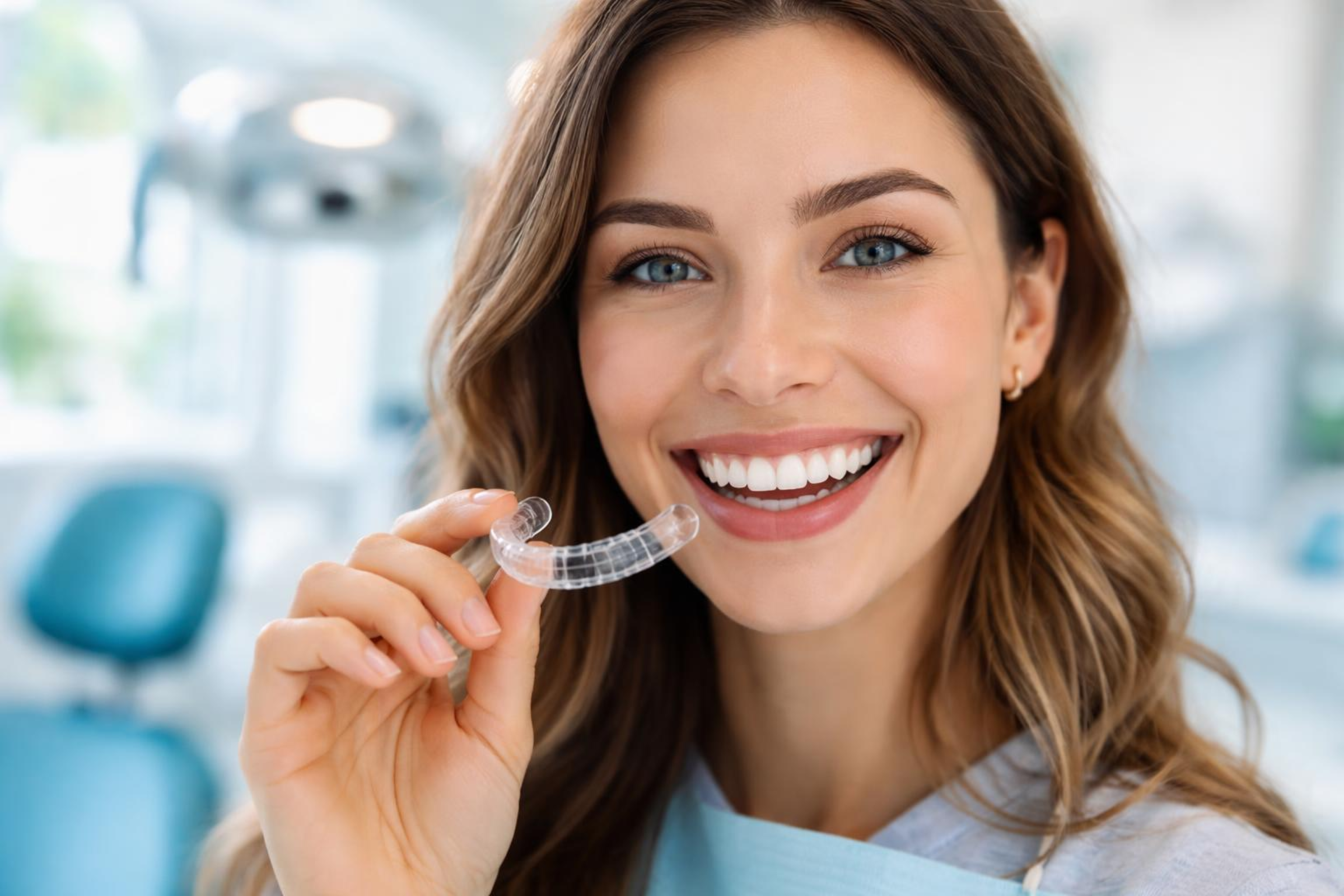
If you want straighter teeth but keep hesitating because you picture brackets, wires, food getting stuck, and a mouth that feels sore all week, I get it. Traditional braces work well, but they are not the only option anymore.
That is why Invisalign gets so much attention. Clear aligners appeal to people who want orthodontic treatment that fits more easily into daily life. They are discreet, removable, and designed around a digital treatment plan rather than manual wire tightening. For many patients, that changes the whole experience of straightening teeth.
The big point is simple: Invisalign can improve the look of your smile and the health of your bite without asking you to live like you have metal braces for a year or two.
That said, it is not magic. It still takes discipline. You still need a proper evaluation. And it is not the right answer for every case. But for the right person, it can be a very practical way to move teeth.
What Invisalign actually is
Invisalign uses a series of custom-made, clear plastic aligners to gradually shift teeth into better positions. You wear each set for a prescribed amount of time, usually around one to two weeks, before moving to the next set.
Each aligner is slightly different from the one before it. That small difference is what creates movement over time.
Unlike braces, there are no metal brackets attached to the teeth and no wires to adjust. The aligners can be removed for meals, brushing, flossing, and certain activities. This is one reason they appeal to teens and adults who care about comfort and appearance.
In cosmetic dentistry, Invisalign is often discussed because straighter teeth change the look of a smile. But it also belongs in the bigger picture of general dentistry, because alignment affects how well you can clean your teeth and how your bite functions.
1. They are hard to notice
This is the benefit most people care about first, and honestly, that is fair.
Invisalign aligners are made from clear plastic, so they are much less visible than metal braces. In everyday conversations, in photos, and on video calls, most people will not notice them unless they are looking closely.
That matters more than some dental articles admit. Adults often delay orthodontic treatment because they do not want their work appearance to change. Teens may feel self-conscious at school. Even people who are generally confident can feel weird about a mouth full of hardware.
Clear aligners lower that barrier. You can straighten your teeth without making the treatment itself the first thing people see.
2. You can take them out to eat
This is probably the most practical advantage.
With braces, certain foods can bend wires, pop brackets loose, or get trapped in annoying places. Crunchy snacks, sticky candy, hard bread crusts, popcorn, and chewy foods often end up on a “be careful” list.
With Invisalign, you remove the aligners before eating. That means there are fewer food restrictions, and meals feel normal. You can enjoy the foods you like, then brush before putting the aligners back in.
There is one catch: because aligners need to be worn about 20 to 22 hours a day, you cannot leave them out for long stretches. Slow, distracted snacking all afternoon does not work well with treatment. Many patients end up becoming more structured with meals, which is not a bad side effect.
3. They are usually more comfortable than metal braces
No orthodontic treatment is completely free of pressure. Teeth need force to move. So yes, Invisalign can make your teeth feel tender, especially when you switch to a new tray.
Still, many people find it more comfortable than braces.
The reason is pretty straightforward. The aligners are smooth plastic. There are no sharp brackets rubbing against the cheeks, no wires poking the lips, and no emergency wax situation because something broke at dinner.
That smoother design can make a big difference in everyday life. If you have ever known someone with a sore spot inside their mouth from braces, you already understand why this matters.
It can also be a relief for people who are anxious about dental treatment in general. Invisalign is still an orthodontic treatment, but it often feels less intense. Sedation dentistry is generally not part of the process because there is no surgical placement or frequent hardware adjustment.
4. Treatment planning is digital and easier to visualize
One of the more interesting parts of Invisalign is how heavily it relies on digital planning.
Your provider takes scans, photos, and measurements, then maps tooth movement in stages. That gives patients a clearer idea of what the treatment is trying to accomplish and how long it may take.
A lot of people like seeing the projected result before they begin. It makes the process feel less abstract. You are not just being told, “We will see how it goes.” You are being shown a sequence.
Of course, teeth are biological, not mechanical. Real life does not always follow software perfectly. Some plans need refinements. But compared with older models of orthodontic treatment, the planning is often more predictable and easier to explain.
If you are the kind of person who wants details before committing, this part of Invisalign tends to feel reassuring.
5. There are usually fewer adjustment appointments
Traditional braces often involve regular tightening or hardware changes. Invisalign check-ins are often simpler. Your dentist or orthodontic provider still needs to monitor progress, but the visits are usually shorter and less hands-on.
For busy families, students, and working adults, that convenience is not minor. It is one of the reasons clear aligners keep growing in popularity.
Less chair time also means less disruption to school, work, or commuting. If you are comparing options at a Vancouver dental clinic, this is a question worth asking directly: how often will I need appointments, and what happens if my treatment needs refinements?
A related point: because there are no brackets or wires, there are fewer urgent visits for broken hardware. That does not mean problems never happen, but emergency dental care for orthodontic breakage is often less common with aligners than with braces.
6. Oral hygiene is easier
This benefit does not sound glamorous, but it may be the most important one.
Straight teeth are often easier to clean well, especially when crowding or overlap makes brushing and flossing awkward. During treatment, removable aligners also make daily hygiene simpler than fixed braces.
You take the aligners out, brush as usual, floss as usual, and put them back in. No threading floss under wires. No trying to maneuver around brackets. No hiding spots for food around metal attachments.
That matters because orthodontic treatment should not come at the cost of gum health. When people struggle to clean around braces, they may develop plaque buildup, gum irritation, staining, or cavities. Aligners do not eliminate that risk, but they reduce some of the obstacles.
In general dentistry, we talk a lot about prevention because it is cheaper, easier, and less stressful than fixing decay later. Better access for brushing and flossing fits right into that idea.
7. They can treat many common alignment problems
There is a myth that Invisalign is only for tiny cosmetic fixes. That is outdated.
Clear aligners can often treat mild to moderate crowding, spacing, overbites, underbites, crossbites, and other alignment issues. For many patients, they are a real alternative to braces, not a watered-down version.
Still, this is the part where honesty matters. Some complex cases may need braces, a combination approach, or evaluation by a provider with advanced orthodontic experience. Severe bite problems, major tooth rotations, or movement involving jaw relationships can be more complicated.
So yes, Invisalign is versatile. No, it is not automatically right for everyone.
A consultation matters because treatment planning is personal. Your teeth, gums, bite, restorations, and goals all affect the recommendation. Someone who has had dental implants, for example, needs a careful review because implants do not move like natural teeth. In certain cases, oral surgery or other dental work may also need to be considered before or alongside orthodontic treatment.
8. They fit active lifestyles better
If you play sports, perform music, speak publicly, or just hate the idea of a mouth full of metal during busy days, this benefit is pretty appealing.
Athletes often like Invisalign because aligners have smooth edges and can be removed when needed. That can reduce irritation during activity. Many people still use a proper mouthguard for contact sports, which is important regardless of orthodontic treatment type.
Musicians, especially those who play wind or brass instruments, may also find aligners easier to adapt to than braces. Brackets can irritate the lips and affect embouchure. Clear aligners are not invisible to the mouth, exactly, but they are often less intrusive.
There is also a general lifestyle factor here. Weddings, interviews, presentations, family photos, travel, and social events all feel easier to manage when your treatment is less noticeable.
9. Treatment time can be shorter, or at least comparable
Everyone wants the quick version. Teeth do not always cooperate.
Still, for the right case, Invisalign treatment time can be similar to braces and sometimes shorter. The exact timeline depends on how much movement is needed, whether bite changes are involved, and how consistently the aligners are worn.
That last part matters a lot. Invisalign only works as planned when patients wear the trays for about 20 to 22 hours a day. If the aligners spend too much time in a napkin on the lunch table or in a bathroom cup overnight, progress slows down.
So when people say Invisalign is faster, the full sentence should be: Invisalign can be faster for appropriate cases when the patient actually follows the plan.
That may sound obvious, but it is worth saying. Removable treatment gives you freedom. It also gives you responsibility.
10. Many people feel better about their smile during treatment, not just after
This benefit is partly cosmetic and partly emotional.
With traditional braces, some people feel like they have to wait until treatment ends before they can feel good about how they look. With Invisalign, the aligners are subtle enough that patients often feel more comfortable smiling throughout the process.
That matters. Confidence is not a shallow outcome. It affects how people show up in photos, at work, on dates, and in everyday conversation. And because straighter teeth can also improve symmetry and bite function, the result is often about more than appearance.
In cosmetic dentistry, confidence is usually part of the conversation because people do care how their smile looks. That is normal. But there is also a practical side: when your bite is better aligned, chewing, speech, and cleaning can improve too.
A few things people should know before starting
Invisalign has real benefits, but it works best when expectations are realistic.
You need to wear the aligners consistently
This is the non-negotiable piece. If you are not prepared to wear the trays 20 to 22 hours a day, the treatment will not stay on schedule. Some people do great with this. Others find the routine harder than expected.
Be honest with yourself. Removable treatment is convenient, but only if you will actually put it back in.
Cost varies
Invisalign is often priced in the same general range as braces, but cost depends on case complexity, treatment length, attachments, refinements, and provider fees. Insurance coverage varies too.
Ask for a full breakdown so you know what is included.
Cleaning matters
Aligners should be kept clean, stored in their case when removed, and never rinsed in hot water. Heat can warp the plastic. Cloudy, dirty trays are also a fast way to make “clear aligners” look less clear.
A simple routine helps:
- Rinse them when you remove them
- Brush your teeth before putting them back in
- Clean the trays as directed by your provider
- Store them in a case, not wrapped in a napkin
Not every case is an aligner case
Some patients need braces. Some need restorative work first. Some need gum treatment before moving teeth. A full exam matters because orthodontic treatment does not happen in isolation. It connects to your overall oral health.
Questions worth asking at a consultation
If you are thinking about Invisalign, here are a few useful questions:
- Am I a good candidate for clear aligners?
- What kind of bite or spacing issues do I have?
- How long is treatment likely to take in my case?
- Will I need attachments or refinements?
- How often are follow-up visits?
- What happens if I lose an aligner?
- How much will treatment cost, and what does that include?
- Will I need retainers after treatment?
Those questions can tell you a lot, not just about the plan, but about whether the explanation makes sense to you.
The bottom line
Invisalign is popular for good reasons. It is discreet, easier to manage around meals, gentler on the mouth, and often simpler to fit into real life than braces. For many people, it also supports better brushing, more predictable planning, and fewer interruptions to work or school.
But the best part may be this: it gives people a way to pursue straighter teeth without feeling like their whole identity has to shift around the treatment.
That is a pretty big deal.
If you are curious, the next step is not guessing based on someone else’s before-and-after photos. It is getting a proper dental evaluation. A provider can tell you whether Invisalign fits your teeth, your habits, and your goals, and whether another approach makes more sense.