

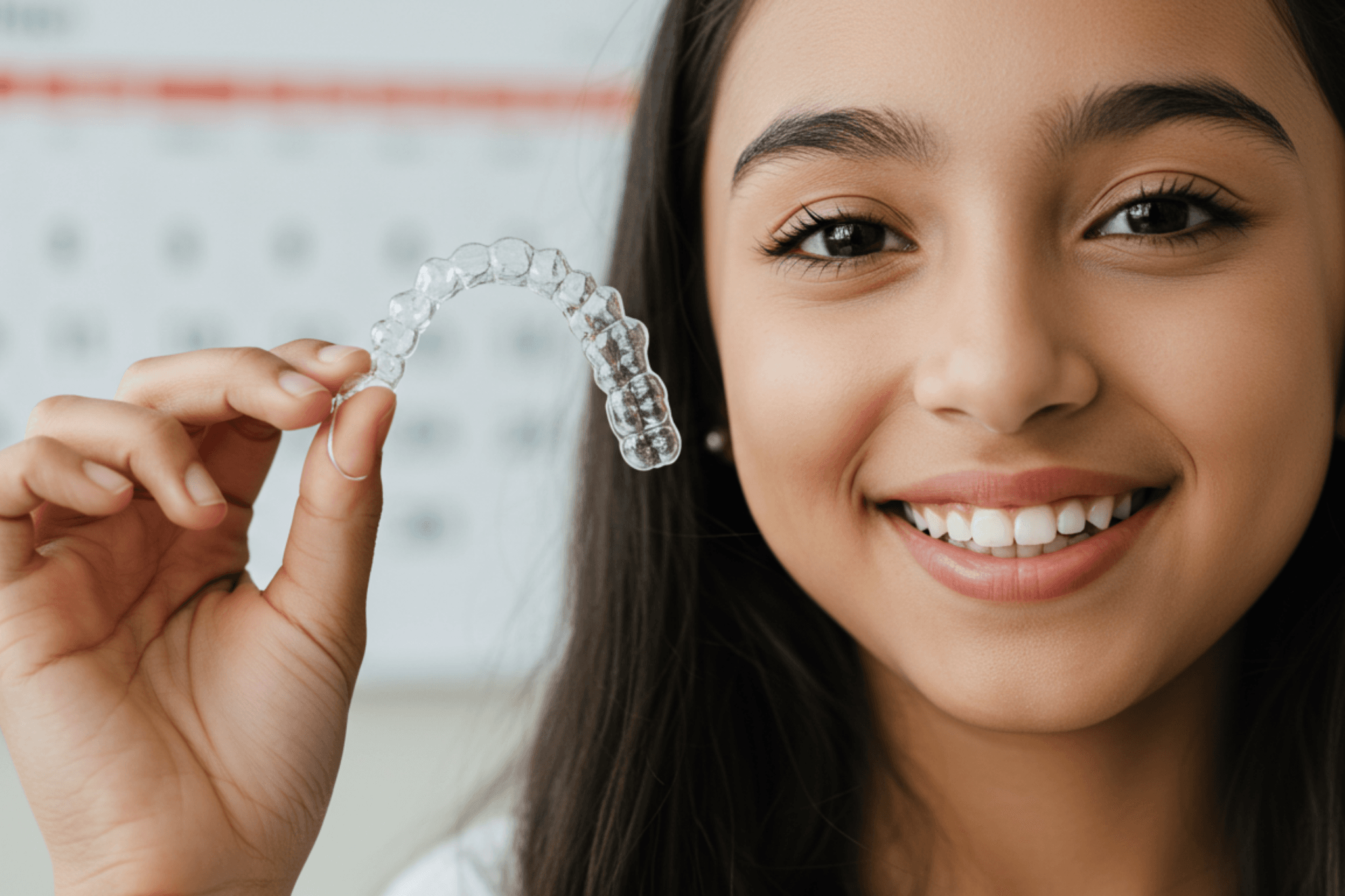
Understanding Invisalign Treatment Time: From First Tray to Final Smile
The journey to a straighter smile with Invisalign is a commitment shaped by several personal and clinical factors. Unlike traditional braces, which often have more standardized timelines, Invisalign clear aligners are tailored to each individual’s specific dental needs. Most patients can expect their treatment to last between 12 and 18 months, but this can vary considerably.
For those with only minor crowding or small gaps, Invisalign can sometimes deliver results in as little as 6 months. Meanwhile, individuals dealing with more complex dental misalignments, such as significant overbites or underbites, may find their treatment extending beyond two years.
What determines your place within this spectrum? It all comes down to the nature of your orthodontic issues, how closely you follow your provider’s instructions, and the personalized plan designed using digital imaging and advanced aligner technology. Invisalign’s flexibility is one of its greatest strengths—aligners are removable and hardly noticeable—but this also means your commitment is crucial. Wearing aligners as recommended is essential for the system to work as efficiently as possible.
Ultimately, Invisalign offers a modern, adaptable solution for orthodontic treatment, but the timeline from your first tray to your final smile is shaped by your unique dental landscape and your partnership with your dental provider.
Average Invisalign Timelines by Case Severity (Mild, Moderate, and Complex)
One of the most common questions among patients considering Invisalign is, “How long will it actually take for my teeth to become straight?” The answer largely depends on the initial condition of your teeth and the specific goals you hope to achieve.
For mild cases—think small gaps between teeth or minor rotations—treatment can be pleasantly brief. Patients in this category typically require about 10 to 20 aligner trays, with results often visible within 6 to 12 months. These cases are often straightforward and respond quickly to clear aligners.
Moderate cases present a bit more challenge, such as moderate crowding or a mild overbite. Here, you can expect to use between 20 and 30 aligner trays, with a timeline stretching from 12 to 18 months. This timeframe allows for the gradual, controlled movement needed to address more intricate alignment issues while preserving dental health.
For those with severe misalignments—large gaps, significant overbites or underbites, or complex tooth rotations—the journey is longer. With over 30 trays in many cases, treatment may extend from 18 to 24 months or more. Advanced digital treatment planning helps ensure even complex cases can progress predictably, but patience and strict adherence to the wear schedule are especially important.
Understanding where your dental case fits within these tiers can help set realistic expectations as you embark on your Invisalign journey.
Key Factors That Change Your Invisalign Timeline (Beyond the 12–18 Month Average)
While the average Invisalign treatment falls within the 12 to 18-month window, several factors can move you ahead of—or behind—schedule. The complexity of your orthodontic concerns remains the most significant variable. Very mild cases are resolved quickly, but significant spacing issues or bite misalignments require more time and precision.
Age is another important consideration. Younger patients, whose jaws and bones are still developing, often experience faster tooth movement compared to adults. While Invisalign works for all ages, teens and young adults may notice their smiles transforming a bit more quickly.
Perhaps the most controllable factor is compliance. To ensure teeth shift as planned, aligners must be worn for 20 to 22 hours each day. Skipping wear, removing aligners too often, or failing to keep to your provider’s schedule can delay results significantly.
Your oral health also has a direct impact on timing. Healthy gums and strong bone support facilitate smoother, faster movement of teeth, while any untreated gum disease or bone loss can slow progress or even halt it temporarily.
Finally, refinements—extra sets of aligners used for fine-tuning results—may be needed after your initial series is complete. These adjustments are common and provide an opportunity for perfection, but they can add weeks or even months to your total timeline. Clear communication with your dental provider about goals and expectations can help manage these variables for the most predictable outcome.
What the Invisalign Journey Feels Like: Month‑by‑Month Progress and Refinements
Embarking on an Invisalign journey is an exciting experience and many patients are pleasantly surprised at how quickly subtle changes begin to appear. In the first two weeks, you may notice a sensation of pressure as your teeth begin to move, which is a sign the aligners are working. Some people describe this as mild discomfort, similar to a tight feeling, but it typically subsides as you become accustomed to the trays.
By the one-month mark, you’ll likely start seeing small but noticeable shifts in your smile and experience greater comfort with wearing your aligners throughout the day. This period is crucial for building the daily habit of consistent wear.
At around three months, most patients see visible changes when they look in the mirror—teeth appear straighter, and alignment is noticeably improved. For those with mild or moderate cases, the six-month milestone often brings significant progress, with many people nearing the completion of their treatment if their dental concerns were less complex.
As you approach nine months, moderate cases can be close to fully aligned, and your provider may begin discussing the need for refinements—extra trays designed to achieve the most precise results. The final months (12 and beyond) focus on perfecting your bite and ensuring every detail is addressed. Refinements can add several weeks to a few months but are an essential part of achieving the healthiest, most attractive outcome.
Each stage of the Invisalign process is designed for comfort, efficiency, and transparency, putting you in control of your progress from start to finish.
How to Get Faster, Predictable Results with Invisalign vs. Braces in Orthodontic Treatment
When comparing Invisalign to traditional braces, many are surprised to learn that clear aligners can be just as fast—or even faster—at correcting mild to moderate dental issues. The efficiency stems from the advanced digital planning that Invisalign providers use, allowing for precise, incremental tooth movements mapped out from the very start. This predictability often translates into a more streamlined treatment process without unexpected delays.
For more complex cases, such as severe rotations or major bite corrections, traditional braces may sometimes have a slight advantage due to their ability to exert different kinds of pressure on specific teeth. However, many providers now find that clear aligners, thanks to continuous technological improvements, can handle an increasing range of orthodontic challenges.
The key to achieving the fastest results with Invisalign is commitment: wear your aligners for 20 to 22 hours each day, switch to new trays only as scheduled (not sooner), and maintain excellent oral hygiene. Neglecting these basics can prolong treatment. Incorporating daily use of “chewies”—small, soft cylinders that help seat the aligners properly—can further enhance fit and effectiveness.
Invisalign offers a discreet, comfortable path to a straighter smile, often with shorter or comparable timelines to braces. By following your provider’s guidance and practicing consistent care, you set the stage for a healthy, beautiful outcome you can enjoy for years.