

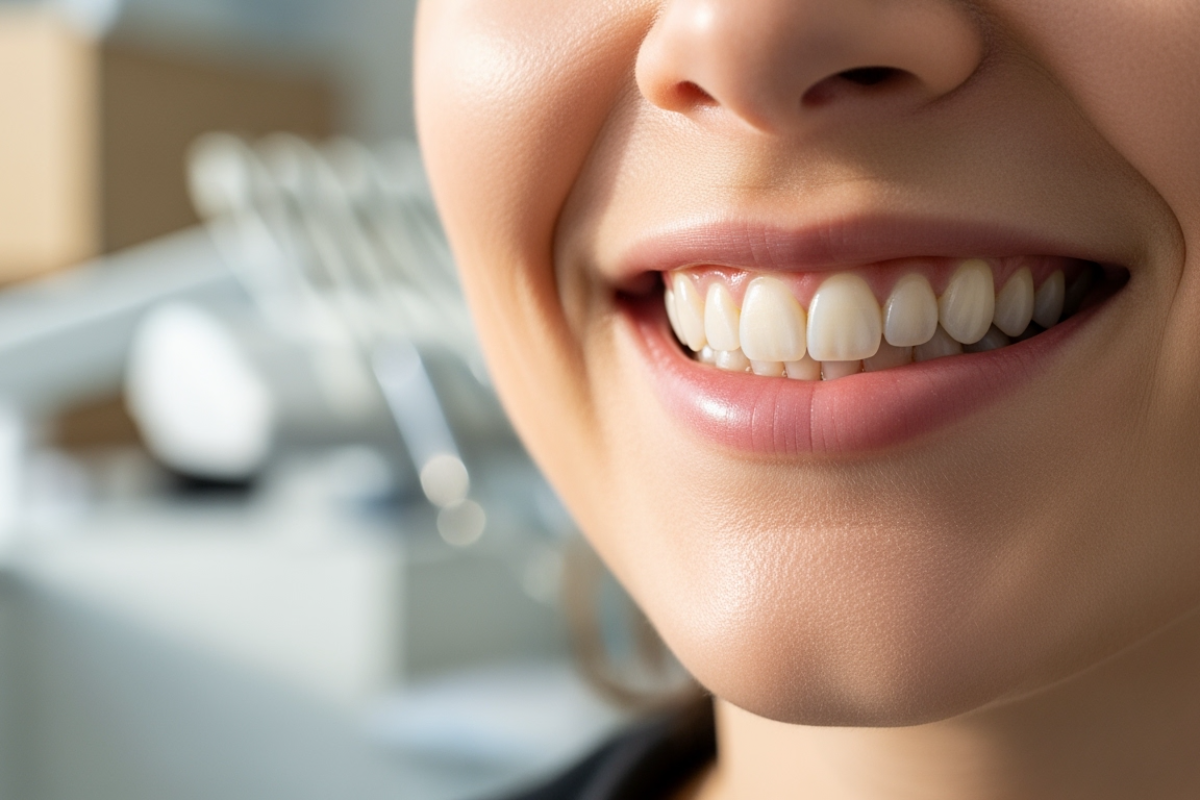
A lot of people say they want a better smile, then immediately add a worry: “I just don’t want veneers that look obvious.”
Fair concern.
When people picture fake-looking veneers, they usually imagine teeth that are too white, too perfect, too flat, or too bulky. That look exists. We’ve all seen it. But it’s not what veneers have to look like. In fact, when veneers are planned well and made with care, most people won’t notice the veneers at all. They’ll just think your teeth look healthy, balanced, and a little more polished.
That’s really the short answer to the question: veneers can look natural. The “fake veneer” reputation usually comes from poor design, low-quality materials, rushed treatment, or a patient asking for a result that doesn’t resemble natural teeth in the first place.
If you’re sorting through options in cosmetic dentistry and trying to separate internet myths from real information, here’s what matters.
What veneers actually are
Dental veneers are thin shells that are bonded to the front surface of teeth. They’re usually made from porcelain or composite resin, and they’re designed to improve the appearance of a smile without changing everything about it.
Veneers are commonly used to address:
-
stubborn discoloration
-
chipped or worn teeth
-
small gaps
-
uneven edges
-
minor misalignment
-
teeth that look too small or irregular
The goal is not to create “new teeth” in the cartoon sense. The goal is to refine what’s already there.
Porcelain veneers are especially popular because porcelain can imitate the way natural enamel reflects light. That little detail matters more than many people realize. Natural teeth are not solid blocks of flat white. They have translucency, depth, and slight variation. Good veneers try to recreate that.
Composite veneers can also look good, though they usually don’t match porcelain for long-term stain resistance or lifelike optical qualities.
Why veneers get blamed for looking unnatural
Honestly, a lot of people aren’t reacting to veneers as a treatment. They’re reacting to bad veneers.
There are two common reasons for that.
The “Hollywood smile” problem
Some people ask for teeth that are extremely white, perfectly identical, and very square. If that’s the look they want, veneers can absolutely create it. But that doesn’t mean it will read as natural.
Real teeth have tiny differences in shape, edge texture, brightness, and translucency. When every tooth looks cloned from the same template, the eye notices.
The one-size-fits-all problem
This is the other big issue. Veneers should be customized to the person’s face, lip line, smile width, age, and existing teeth. If the same smile design gets applied to everyone, results start to look generic fast.
A natural smile is personal. That sounds obvious, but it gets missed.
The biggest factors that decide whether veneers look natural
If you strip away the marketing, four things usually determine the final result.
1. Material quality
Material is not everything, but it matters a lot.
High-grade porcelain tends to give the most natural appearance because it mimics enamel better than cheaper or more opaque materials. Natural enamel isn’t one flat color. It lets light pass through to a degree, especially near the edges. Good porcelain can copy that effect.
If the material is too opaque, teeth can look chalky. If it’s too monochrome, they can look like ceramic tiles. That’s the part people often read as fake, even if they can’t explain why.
Composite resin can be a reasonable choice in some situations, especially for smaller corrections or when a more conservative approach is preferred. But for patients who care deeply about realism, porcelain often has the edge.
2. Color matching
This is where a lot of smiles go wrong.
The natural look doesn’t come from choosing the whitest shade available. It comes from choosing a shade that fits the rest of the mouth and the person wearing it.
That includes:
-
the color of nearby natural teeth
-
skin tone
-
age
-
lighting conditions
-
whether the patient plans to whiten untreated teeth
Natural teeth also have variation. The neck of the tooth near the gum is often slightly warmer. The edge can be a little more translucent. If veneers are designed as one solid bright color from top to bottom, the result can look flat.
People sometimes think “white equals beautiful,” but teeth that are too bright compared with surrounding teeth can look disconnected from the face. It’s distracting. A slightly softer, believable shade often looks better in real life than a glaring white smile on a shade guide.
3. Shape and size
Shape is not just a dental issue. It’s a facial issue.
The best veneer shape for one person may look completely wrong on someone else. Teeth should work with facial features, smile arc, lip movement, and the proportions of the remaining teeth.
For example, veneers may start to look artificial when they are:
-
too long for the face
-
too wide for the smile
-
too square for a softer facial structure
-
too symmetrical to look human
Natural smiles are balanced, not identical. That distinction matters.
A skilled dentist in cosmetic dentistry will usually think beyond “make them straighter and whiter.” They’ll look at how the teeth relate to the whole face. That’s where the best results happen.
4. Placement technique
This is the part patients don’t always see, but it changes everything.
Even beautiful veneers can look wrong if the teeth were poorly prepared, the fit is off, or the bonding is imprecise. Placement affects thickness, gumline appearance, edge blending, and how seamlessly the veneers sit against neighboring teeth.
If veneers are too bulky, they can create that “stuck on” look. If the edges aren’t blended well, they may catch the light oddly. If the margins near the gums are rough or visible, the illusion falls apart.
Technique is why the same material can look amazing in one case and awkward in another.
What the veneer process usually involves
People sometimes imagine veneers as a quick cosmetic shortcut. They’re not random, and they’re not just glued on in an afternoon without planning.
The process usually includes a few key steps.
Evaluation and planning
The dentist examines your teeth, bite, gum health, and overall smile. This matters because veneers should sit on a healthy foundation. If there’s untreated decay, gum inflammation, or bite problems, that needs attention first. This is where general dentistry still matters, even for a cosmetic treatment.
Tooth preparation
A small amount of enamel is often removed from the front surface of the tooth to make room for the veneer. The amount depends on the case and the type of veneer being used.
This step helps prevent a bulky appearance. Skipping proper preparation when it’s needed can be one reason veneers end up looking thick or unnatural.
Impressions or digital scans
Accurate impressions or digital scans are taken so the veneers can be custom-made. The more precise this stage is, the better the final fit tends to be.
Fabrication
A dental lab creates the veneers based on the planned shape, size, and shade. This is where good communication between dentist, lab, and patient really matters.
Bonding
Once ready, the veneers are bonded to the teeth with dental adhesive. A careful bond helps them feel secure and look integrated, not added on.
It’s a meticulous process. Or at least it should be.
Signs veneers may look fake
If you’re looking at before-and-after photos or trying to judge whether a result feels natural, here are a few common warning signs.
They’re much whiter than the surrounding teeth
A dramatic mismatch is one of the fastest ways veneers draw attention for the wrong reason. This is especially noticeable if only a few front teeth were treated and the neighboring teeth were not.
Every tooth is identical
Natural teeth have small differences. The front teeth may mirror each other loosely, but not perfectly. When each veneer has the same length, width, line angle, and shape, the smile can look manufactured.
The teeth look too thick
Bulky veneers can change the profile of the smile and even the way someone speaks or closes their lips. Good veneers shouldn’t look puffy or overbuilt.
The edges are too blunt or too flat
Natural teeth often have subtle edge character. Veneers that end in one straight, uniform line can look stiff.
The gums don’t look harmonious
Even beautiful veneers can seem off if gum levels are uneven, inflamed, or not considered in the design.
How to improve your chances of getting natural-looking veneers
This is the practical part. If you’re seriously considering veneers, here’s what helps.
Look for real aesthetic judgment, not just technical skill
Ask to see before-and-after cases that look natural, not just dramatic. Some dentists are excellent at bright, high-glamour transformations. Others are better at subtle smile design. Neither is automatically wrong, but you want someone whose taste matches yours.
If every photo in a portfolio looks extra white and ultra-uniform, pay attention.
Be specific about the kind of result you want
Saying “I want a nice smile” is too vague. It helps to say things like:
-
I want them to look like my teeth, just better
-
I don’t want them overly white
-
I want softer edges
-
I want to keep some natural character
-
I like this photo because the smile looks believable
That kind of guidance matters.
Choose quality materials
If a natural look is your top priority, higher-quality porcelain is often worth discussing. Material choice affects translucency, texture, and how the veneers behave under different lighting.
Use previews when available
Digital smile design and mock-ups can be genuinely useful. They let you react before treatment is finalized. Sometimes patients think they want one thing, then realize in a preview that the teeth look too large or too bright.
That’s a good moment to change course.
Keep expectations realistic
Veneers can improve a lot. They cannot make teeth look “perfect” and “totally natural” if the requested design is extremely artificial. Those goals can conflict.
I think this is where many disappointments begin. Patients sometimes ask for an ultra-white celebrity smile and then feel uneasy when it looks less like natural enamel and more like polished porcelain. That’s not a failure of veneers. That’s a mismatch between the goal and the outcome.
Technology has made natural results easier to achieve
This part is worth noting because modern veneer work is more precise than many people realize.
CAD/CAM systems can help create more accurate fits. Digital smile design software lets dentists plan proportions and preview changes before treatment. Newer porcelains and improved composite materials can reproduce enamel texture and translucency far better than older materials could.
Technology doesn’t replace judgment. It just gives skilled clinicians better tools.
If you’re comparing options at a Vancouver dental clinic, this is one area where it makes sense to ask questions. Planning tools and lab quality can influence how refined the final result looks.
Veneers are not the right answer for every smile
This gets lost in a lot of online conversation.
Veneers are one option in cosmetic dentistry, not the only option. Depending on the issue, a dentist may also discuss whitening, bonding, orthodontic treatment, or a mix of treatments.
For example:
-
If the main problem is crooked teeth, orthodontic treatment may make more sense than covering teeth with veneers.
-
If a tooth is missing, dental implants might be the better solution.
-
If there’s active decay or gum disease, general dentistry comes first.
-
If a tooth is badly broken after trauma, emergency dental care may be the urgent need before aesthetics are even discussed.
-
In some complex cases, oral surgery may be relevant.
-
For anxious patients, sedation dentistry may help during longer cosmetic procedures.
That broader view matters because a good treatment plan should fit the actual problem, not just the trendiest fix.
How to keep veneers looking natural over time
Getting veneers is one thing. Keeping them looking good is another.
Stay consistent with oral hygiene
Brush and floss regularly. Veneers themselves don’t decay, but the teeth underneath and the gum tissue around them still need care. Inflamed gums can make even beautiful veneers look unhealthy.
Watch stain-heavy habits
Porcelain resists stains fairly well, but surrounding natural teeth can darken over time. Coffee, tea, red wine, and tobacco are common culprits. If nearby teeth stain while veneers stay the same, color mismatches can become more obvious.
Keep up with check-ups and cleanings
Regular visits help catch bonding issues, gum irritation, or wear before they become bigger problems.
Protect them if you grind your teeth
Grinding can damage veneers, especially at the edges. A nightguard may help if clenching or grinding is an issue.
The confidence piece is real, even if it sounds a little cheesy
I know people roll their eyes when smile discussions get emotional, but this part is true.
When veneers look natural, people tend to stop thinking about their teeth so much. They smile more freely in photos. They don’t cover their mouth when laughing. They worry less during conversations or job interviews. It’s subtle, but it can affect how someone moves through the day.
That doesn’t mean veneers solve self-esteem. They don’t. But feeling comfortable with your smile can remove one nagging source of self-consciousness, and for some people, that’s a big deal.
The key word there is comfortable. Not dazzled. Not transformed into someone else. Comfortable.
So, do veneers look unnatural?
They can. Bad ones do.
But veneers themselves are not inherently fake-looking. Well-made veneers, using good materials and careful planning, can look remarkably natural. Often the best veneer work is the kind nobody notices.
If you’re considering them, focus less on the label “veneers” and more on the decisions behind them: material quality, shade selection, shape, thickness, and the experience of the dentist designing and placing them.
That’s what separates a smile that looks believable from one that looks overdone.
And if your goal is simple, believable improvement, that’s a very reasonable goal. Probably the best one.